Showing posts with label Review games. Show all posts

Wednesday, 1 February 2017

Resident Evil 7 Game Review


The very best Resident Evil game is hotly-fought, though generally, the same few crop upward. The Gamecube remake, 2 and 4 consistently form the keystone of any chat about Capcom’s best.
The long-overdue return to survival horror is just what the show needed and, even though the move to the initial guy might look a revolutionary change, Resident Evil 7 still plays like a Resident Evil game. A superb one at that.

While the tank managements of old used to cause panic with a sense of powerlessness, playing from the point of view of Ethan as he fights the Bakers to save his girlfriend, Mia.

Among the greatest practical layout of any game of the year. Seemingly poor sounds suddenly become utterly terrifying the heftier into the game you get. Capcom is very reasonable in the manner it frightens the player. It doesn’t merely go for the economical enjoyments in manners that game like Until Dawn: Rush of Blood do, instead, it can help the player to get comfortable through repetition.

Gameplay

The times when you're slipping through a narrow passageway, the music rises and grows as if Jaws is approaching so that you begin to expect Jack to get you by the throat as you reach its end, or open a door to a fresh room expecting to be thrown through its walls by him, but it doesn’t occur. You'll be mistaken and WOn't ever have the knowledge of what to expect, the dreaded expectation of sound effects, meaning any sudden sound will take you to the border.

While moving around a hall, the clear-cut sound of a bottle hitting the floor, a door closing upstairs or rusty pipes means constantly whirling Ethan 360-degrees to the position where he must start feeling ill. Capcom has done a severe management in driving players insane with the agony of a panic which never comes, that’s of course until it comes and somehow manages to still be terrifying.

The very first half of Resident Evil 7 feels like teen slasher horror movie. It’s a player versus whichever member of the Baker family is notably pissed off, it’s quite thrilling. Hiding behind sofas and cartons as Jack stomps around yelling obscenities hunting for Ethan is truly extreme.


Battles

One new conflict machinist is Ethan’s ability to obstruct. Block significantly reduces the damage taken from strikes, and you’ll instantaneously learn how crucial this machinist is during conflict, and for a player, to born some initial growing pains joining obstructing and jogging. With previous Resident Evil games, the strategy was always to turn and run to comparative security before turning to shoot the enemy. Now, turning your back presents serious vulnerability, so it’s now more tactical to have a crack while obstructing before fleeing.

There's definitely going to be many nods to enthusiasts through the whole game: from the use of clear-cut herbs to even the sound of pressing buttons on a keypad being picked directly from the very first matches. It’s clear that every facet of the game was assembled by programmers using a true fondness and understanding for this specific franchise’s history.

The gameplay and sound are complemented by breathtaking visuals, also. Resi 7 features PS4 Pro support with whole 4K and HDR and is one of the finest matches to take advantage of the technology. The step up in visual fidelity is immediately noticeable on what’s an already sensational match. Candles flicker by means of a brightness which could damage your eyes to look at for too long but the fire might be encompassed by pitch darkness, a blast of the flamethrower in a dark room will light it up with blinding light.

The superb sound and appears would simply be window dressing if Resi 7 wasn’t compelling to play, and happily, it’s thanks to amazing voice acting coupled with a strong story. As the story unfolds and this new kind of ailment causes its problems to deteriorate farther it leads to a want to locate more. The T-Virus has existed for decades to the phase where pros can detail its lineage, but this new virus differs, giving us tons of questions to find remedies for. Resident Evil has consistently done a fantastic job of telling the story beyond cutscenes and that continues in 7 with newspaper clippings, diary entries and other things panned in the map further embellishing the Baker’s already strong story.

Yet, there comes a time in the midway phase where the landscape of the game fully transforms, all hindered on a crucial narrative plot point. Unfortunately, the second it's built on significantly lacks the narrative power Capcom considers perplexed the players.


VR Experience

Later, naturally, there’s the support of PlayStation VR. Capcom has tried to make the VR experience conforming to any or all players with numerous settings, including an “easy” choice where moves on the very best analog stick are one to one and let Ethan go as he does in the regular game mode. Regrettably, the VR encounter quite nauseating, the juxtaposition of Ethan’s head going while your thoughts stayed still was something my brain couldn’t contend with, so I altered to the more inflexible alternative, where images of the stick left or right sees Ethan turn at sharper angles.

There are multiple problems with VR which make it a considerably lesser experience than in the TV version. For starters, the pictures quality takes a top fall, as you might expect, even when running on the Master, and studying how amazing the game looks on the TV, the step down can feel a little too exorbitant. Second, as a result of somewhat fiddly movement mechanisms, it can lack the dexterity needed in the game’s more challenging sequences, making the confrontation far more frustrating than it need be.

Resident Evil 7 gameplay is way too terrifying to play in VR, especially on a first playthrough. The nerves while playing Resident Evil 7 even on the TV meant I couldn’t image playing it in virtual reality without having at least some knowledge of what lies ahead. If you’re a true thrill seeker, masochist or really mental, then do it, but I undoubtedly didn’t possess the heart or abdomen for it. I feel like VR ought to be treated as a way of valuing the Resident Evil 7 highlight reel rather than utilizing it during extreme gameplay minutes which require preciseness.

For more game reviews, take a look at Review Gamers at http://reviewgamers.com.

Sunday, 18 December 2016

The Last Guardian Game Review


The Last Guardian Game Review

Pros
Completely captivating story
Trico actions in an astonishingly lifelike style
Participating relationship between boy and Trico
Brilliant set piece seconds

Cons
Management scheme may be greatly fiddly
Getting Trico to do what you'd enjoy at times is despairing

About the game


The Last Guardian game tells the story of a young lad and his ginormous bird-dog-rat partner, Trico. The story begins with both waking up in a cavern, not comprehending how simply they got there. What's immediately obvious, however, is that Trico isn’t actually friendly.

Bound in chains, Trico is initially competitive towards the tat-covered lad – his name's unknown through the storyline – but after the young boy finds nourishment for the creature in a couple of aglow barrels, Trico dampens its standing. This is a fantastic thing because both boy and creature will rely on each other throughout their entirely participating journey.

Gameplay

The Last Guardian operates very much like a medley of the programmer’s preceding efforts. You, as the lad, can scale Trico much like mounting creatures in Shadow of the Colossus, while the recognition of teamwork and non-verbal communication is reminiscent of Ico. As you've got to climb, crawl and jump around this world, finding levers to pull to open doors and direct both of you through the labyrinth. The 15-year old formula has had some tweaks, though not as much as you might expect, and this often results in The Last Guardian’s greatest defects.


Many the gameplay relies on communicating between the lad and Trico. Neither share a common language and for that reason must gesture towards one another in the hope the message gets across. It won’t be long before you’re given the ability to direct Trico using each of the tasks the lad can do – essential stuff like move here, jump up there, shove that, but all essential for advancement – and sometimes the inability for the giant creature to do what you want will bring about great frustration.

Trico’s learning as much as you are, albeit at a slower speed, so of course, it mightn't comprehend what’s going on. Mechanically, however, it may be a crash.

The frustration lies in comprehending the answer to the puzzle, but the game not allowing you to solve it, either through a bug or merely subordinate layout. For instance, within a room Trico was required to move through a particular doorway which was partially obstructed. You've got to ordered it to go through after clearing the means, merely for Trico to get right up to the doorway and then run away, as if there were some invisible obstacle obstructing its path.

Game Controls

It doesn’t help the controls are as fiddly as they were on the PS2, either. Transferring the lad by means of the world is janky and cumbersome, with the platforming mechanisms penalizing a shortage of pinpoint precision. The camera might also be jarring. When caught in a corner or on a piece of scenery, the screen completely fades to black before showing you a distinct perspective of what you were looking at, completely disorientating you.


In place of understand the relationship between Trico and additionally the lad as they solved puzzles through their enriching bond and developing their specific language. This inconsistency is really more unsatisfactory because, when it works, The Last Guardian is striking.

Seeing Trico and additionally the lad slowly develop trust is a real pleasure. The game takes its time to come up with the relationship and is even more powerful for it. The relationship between the lad and Trico increasingly more engaged by this believable bond – almost like a Disney movie. As the player, the link developing more strong through each minute of risk.

At the beginning of the game, Trico got the lad from A to B. However, by the halfway stage, every time Trico was even a hint of threat during the unbelievable set pieces. That need to petted Trico frequently, even though there’s no actual increase from doing this. The Last Guardian does an astonishing job of making you care.

Furthermore, Trico’s features dampen over the course of the game, making it increasingly more adorable with every passing hour. Initially, Trico’s eyes can flash disagreeable white and purple – you afterwards locate this is corresponding to various matters within the game, by means of example, Trico either desiring food or being in ‘strike’ mode. At some point, you can see Trico for what it is: a awful creature becoming really linked to the child it's saved, and who's saved it, in a strange land.


Bottomline

Studio Japan has continued to show how it can do so much while saying so little. The atmosphere, characters and everything about the story is incredible. The Last Guardian gameplay storyline is a simple one, but powerful nonetheless.

Sunday, 30 October 2016

World of Final Fantasy Game Review

 
Positive
  • Piling creatures provide a unique twist on classic turn-based combat
  • All your favorite Final Fantasy characters in one game
Negative

  • In-game Fight loses all steam 15 hours
  • Late game padding
Gameplay

World of Final Fantasy walks a thin tightrope. It must be two things to two different kinds of people as it tries to bring new, younger players who enjoy JRPG gameplay and characters who wouldn't be out of place in a tween-friendly cartoon show while offering large doses of nostalgia, more tactical systems for longtime series collection devotees. For the first 15 hours, it's fairly successful at doing both - but once the challenge vanishes, the happiness of seeing all your favourite Final Fantasy characters and creatures instantly gives way to repetition.

Characters


In World of Final Fantasy, you play as youthful twins Reynn and Lann, that have found themselves without memories in a magic world full of miniature, Funko Pop-formed characters and creatures known as Lilikins. They refer to Reynn and Lann as 'Jiants', as they've the skill to transform between standard and Lilikin size at will, and can capture and use the power of the numerous 'mirages' who roam the region. Within the first few minutes of playing, you're treated to a Kingdom Hearts-ian, but what saves World of Final Fantasy from completely derailing is its preparedness to make fun of itself endlessly. Our heroes aren't afraid to mock each other over their inability to comprehend the complex web of prophecies that rule the land or joke about the ridiculousness of riding in a train ran by a sentient Cactuar.


The secret to regaining your memories and purging the property of poor lies in your journey across Grymoire to find a sequence of keys and this is how World of Final Fantasy slots in its references and callbacks. The game practically begins in Corneria, the principal town in the first Final Fantasy, and as you progress, you'll meet familiar faces like Final Fantasy 7's Cloud and Tifa, and see identifiable areas like Final Fantasy 10's sundrenched Besaid Island. Buffs will get more out of these references, as World of Final Fantasy sends up everything from Tidus' stupid trick to Lightning's amusing patience, but it also does a decent job providing new players with enough description that they'll have the capacity to understand motivations even if they don't get all its references. With a clean, cartoony fashion and feeling and astonishingly high generation game quality, it's hard not to fall in love with its attractions, even when the storyline goes into whole plot twist melodrama manner about 20 hours in-game.

Battles


The fight is as much a mixture of new ideas and tried and true Final Fantasy tropes as the narrative, and for the first dozen or so hours, it's actually lots of amusing. Conflict flow harkens back to the quasi-real time/move-established Active Time Battle system of yore, where characters take turns picking from a menu of strategies and specific abilities, and turn sequence can be altered by the individual agility assessment of each character, in addition to by various spells and buffs. As Jiants, Reynn and Lann actually can get mirages and after that use them in conflict, not unlike Pokemon.

Skills and Techniques

Where World of Final Fantasy incredibly diverges from that creature-catching RPG is in how you build your bash out with those creatures. Here, you may form piles of three characters - one large, average, and little - and each stack is a mix of the individual parts' stats, abilities, strengths, and weaknesses. A creature may have a chain of fire charms and be weak against water, and if you add that creature to the underside of a stack, those features apply to the whole tower. Stacks are consistently more powerful than individual characters, but there are times when you might need to stack characters, whether it's to reduce the chance for getting hit by a strong appeal or to allow multiple characters the chance to to use things before the enemy gets a move in. Stacks are often toppled over if hit with enough power, and enemies can come in stacks also, so everything that applies to you applies to them as well.


There are a few fights following this stage that wants only a bit more effort, but for the most part, are simply simple. Between all of the options in the Mirage Board, the Victor you'll be able to unlock which summon classic Final Fantasy characters to perform powerful strikes, the Mirajewels you can equip which give Reynn and Lann additional powers beyond their own stacks, there are just too many opportunities attainable to break the game and steamroll through the back half once you discover how everything fits together.

World of Final Fantasy would have been an easy recommendation. The storyline may be up there on the anime crap scale, but ultimately, it's an enjoyable, bubbling animation-inspired romp through the greatest hits of Final Fantasy characters, locations, creatures, and airs, and its conflict system is really amusing. For devotees of the Final Fantasy series, getting to see Edgar from Final Fantasy 6 hang out with Vivi from Final Fantasy 9 is a rare surprise, and for starters, it's a bizarre, enchanting narrative full of exceptional theories you could only get from Final Fantasy.

For more most popular and latest game reviews, see Review Gamers at http://reviewgamers.com.

Dragon Quest Builders Game Review


Pros
  • Building things and design towns is creatively and mechanically rewarding
  • Quest lines help introduce more complex systems
  • Handcrafted worlds allow for special challenges

Cons
  • Controls and camera are fiddly, especially inside
  • Fight is fairly fundamental and wonky

About the Game

The world lies in ruins; you are the only one who can restore it to its former glory. It's a platitude among platitudes, and it's one that Dragon Quest has shown in since the chain’ beginning. Dragon Quest Builders needs to do something a bit different, though. Rather than going from city to city using up things and destroying creatures, Contractors actually wants you to create, to use your own two hands to craft your tools, rebuild towns, and cleanse the world of evil through the magic of building.

Dragon Quest Builders places itself as sort of an alternate sequel to the initial match in the group, create after its hero decides to strike a deal with the Dragonlord to join him and rule the world with an iron fist. With the world destroyed, you awaken (after character creation - determining your sex, skin color, and character name) in an underground cavern, the only one in a barren land who comprehends the finest method to create. Over four chapters, you'll travel to distant locales to rebuild hamlets, fight an outrageous quantity of slimes and other Dragon Quest fundamental foes, take on quests for new residents, and find the needed things for the magic weapons you'll need to take down each region's supervisor. It is cartoonish look and story might appear straightforward, but it's as charming and bubbly as any other match in the set, with well-written characters and the brand stylings of group artist Akira Toriyama. It's total Dragon Quest fanservice, complete with a soaring orchestral soundtrack by original show composer Koichi Sugiyama.


Gameplay

To describe its gameplay in the most clear-cut terms, Dragon Quest Builders is a mix between survival and crafting games like Minecraft and action RPGs like The Legend of Zelda, joining the resource collection of the former with the quest-recognized progression and fight of the last. When you start, you are going to only have access to an introduction of fundamental, wooden matters, which break easily and can only deconstruct the simplest elements. As you help villagers with their requests - whether that's bringing them a smattering of special matters, slaying creatures, or building and designing rooms to their terms - you'll get access to new recipes, which therefore give you access to more things, tools, and materials.


It might appear that its two halves - the boundless imagination offered by its crafting systems and its more exact storyline and quest-recognized building - would be at odds, but they actually complement each other very well. Besides the occasional pattern (which drives you to build a room to exacting specifications), you're largely free to build each town yet you love. The only requirements to designing a room are that it is a wall two squares high, a light source, and a door, and once a room is completed, you’ll be rated for your efforts. Different combinations of buildings will create special kinds of rooms, which add motivators to your town, like letting your villagers cook food for you when you are away or let them more powerful weapons in conflict.

Building

Extremely building matters, for the most part, is relatively painless, and even if you screw up, a couple whacks will transform whatever you've put back into a tiny version of that thing which you're capable to pick up and place again. But the most remarkable thing is seeing your hamlets develop and blossom as time passes. When you first arrive in a location, you are going to perhaps have room to craft matters and a fundamental bedroom with straw mattresses. By the time you're finished, you are going to have a bustling town with a half dozen other folks milling about, each leading in humble but helpful manner. It feels incredibly amazing to look back and see the progress you've made and the things you've built.


Handcrafted building, Dragon Quest Builders can provide extraordinary challenges you WOn't see in other procedurally-created games. By the end of chapter one, you've likely got a handle on the best method to build defensive structures and the means to upgrade from wood to steel, to silver, and on. Once you step through the portal site to the next chapter, though, your health, things, and equipment are reduced to the bare minimum once again, and the mineral-rich areas of chapter one give way to a barren, poisoned wasteland, where even fundamental elements like wood are quite uncommon. It's a small bummer to lose everything at first until you understand this new world now holds an entirely different set of challenges that force you out of your comfort zone because you simply don't have the exact same material reachable. Each chapter comes with its own set of exceptional setting and challenges to conquer, and while the main quest is relatively clear-cut, there are numerous side areas that want you to find keys or solve puzzles to get the advantages hidden within.

If you're hunting for some more freeform imagination, the Terra Incognita manner is considerably closer to a typical Minecraft game, which drops you into a map where you're able to create to your heart's content without stress about creature strikes. It is possible that you get portal sites that take you to the universes of the chapters you've cleared, so you could fight enemies and get access to exceptional parts to customize your private universe, and after that share your creations with other players online. You won't find a creation bundle as deep as Minecraft’s, but you have enough tools at your disposal to create some impressive-looking structures, provided that you've got time and resources available to do that.

Quests

While the building and quest are well-performed and fleshed out, just the same CAn't be said for Contractors’ fight, which is really crucial and eventually kind of wonky. Most fights are little more than watching for enemy wind up animations and trying to go out of the way while mashing the attack button and trusting your weapons don't break mid-fight. There are the occasional town defense quests, which require you to fend off several waves of attackers while using the defenses you've built, but the moments where everything comes together (and the enemy AI joins forces with your snares) are relatively unusual compared to how the rest of most encounters tremble out. Eventually, the action just isn't all that hefty and satisfying, especially when held up against its more rewarding crafting and town-building systems.

Game Controls

Contractors' camera and controls may also fight against you occasionally, and usually at the most unsuitable minutes. Most of the time, they may be serviceable, but when you're in the thick of fight or in enclosed spaces, you are going to likely long for more responsive and precise controls and a camera that'll actually show you what you must see. If you wind up deep underground, as the camera pulls in so tight it's extremely difficult to see what's occurring. A clear-cut first person fashion could have done a lot to mitigate these discouragements.

But even with these issues, Dragon Quest Builders is simple to recommend. It may not be as hefty as its genre counterparts, but its mashup of crafting, survival elements, and RPG questing location in the lively, cartoony world of Dragon Quest is a rewarding and breezy delight for players of all levels of creative ability.

For more reviews of most popular and latest games, see Review Gamers at http://reviewgamers.com.

Friday, 8 July 2016

About Pokémon Go Game


Prepare for an all-new Pokémon encounter!

Pokémon GO starts a universe of Pokémon to find, catch, and battle in your iPhone or Android apparatus! With Pokémon GO, you will find Pokémon in a wholly new universe—your own! Pokémon GO will use genuine location information enabling players to experience shooting, trading, and fighting Pokémon.

Augmented reality (AR) is a superior gimmick. There is something really great at considering an ordinary room you hang out in every day - and seeing a real, transferring Pokémon.

In-Game Shop

Pokémon Go is free to play, but there are, clearly, in-application purchases. For a just $149.99, you can buy 14,500 Pokécoins! Or if this's somewhat affluent for you, the most economical purchase is 100 Pokécoins for $1.49.

You need Pokécoins to buy more Pokéballs (100 coins for 20), along with boosters like incense (entice Pokémon to your own location for half an hour, for only 80 coins) and Lucky Eggs (double XP for 30 minutes for 80 coins each).

But that is a team match where you roam around the public, right? So you can even get Entice Modules, which bring Pokémon into a Pokéstop for half an hour.

Now, it does not appear like there's a method to get Pokécoins without paying genuine cash. The amazing thing is it is possible to get free Pokéballs and other things by leveling up and at Pokéstops.

The game just started on July 6th 2016, and it's surely been popular.

- Username should be super distinctive.
- If you place your mobile into sleep mode just after having successfully located a pokemon (let's say, if you are playing this at work), it glitches outside and will not count it - but it will count the balls you used trying to catch a pokemon. The app also empty a lot your phone's battery.
- You CAn't trade with or battle other trainers yet - once you're level 5 you are able to begin challenging nearby health club, but there is nothing live. Perhaps in near future upgrades trading and battling with others will be potential same as the preview.

Pokémon GO makes good on the guarantee of being able to detect, catch, train, and conflict Pokémon in augmented reality world, and we’ve picked up a couple of useful tricks to help you to in your quest to be constantly a Pokémon master.

Get ‘em all

Until you have a lifestyle that packs in lots of traveling you’ll likely hit tons of exactly the same kinds of Pokémon when you're on an outing but don’t fret, that’s actually a wonderful thing and in fact an essential part of how you can advance as a trainer. When you catch a Pokémon you’ll see that it contains a few additional goodies, especially in the form of something called ‘Stardust’ and sweet exceptional to that strain of Pokémon.

If you should bolster your Pokémon up immediately, or actually develop them, getting tons of precisely the same Pokémon form is the only (free) surefire approach to ensure which you have the needed equipment to toughen up your Pokémon for those all important fitness center battle. Catching every Pokémon you encounter may also help speed through those first five experience levels also.

Not all Pokéstops are created equal

Niantic Labs - the team behind Pokémon GO had a preceding title called Ingress, that centered around location-based gameplay in rather a similar way. You may have detected that Pokéstops appear on real world landmarks, leading places and other important points of interest, but seeing some can be more valuable than others, just like the programmer’s last match.

Whilst this isn’t an absolute guarantee, a rule of thumb is the bigger and more well-known the landmark is, the greater the loot you’ll receive when you see it. Most run-of-the-mill Pokéstops will dole out two or three Pokéballs and, on occasion, the odd potion, but head to your more important P.O.I and you’ll probably land greater than three things or at least more useful/powerful things in one visit.

Here be pocket creatures

It’s not only the road layouts of the real world that marry up with the world of Pokémon GO, you’ll also see that greenland, for example, parks or gardens, together with waterways, rivers, and oceans are all moreover accounted for – these are all superb places to locate Pokémon if you’re fighting.

Look out for rustling leaves, suggesting at where critters may be lurking and only hang out in a suspected place for the increased chance of an encounter. Not all Pokémon stick to an identical timeframe either, many players have reported finding more psychic, fairy and phantom sorts in the evening or at night, so if you’re attempting to bag the likes of a Clefairy or a Haunter, you might must pull a late one to help you to track them down.

As with rustling grass, hanging out near sources of water may also increase the possibility of running into water-type Pokémon.

What’s with the footprints?

When on the hunt for Pokémon you may have seen the small footprint icons next to the various pocket creatures purportedly in your current area. In the present construct of the game at least, it’s never really described what those footprints mean, but we can verify they refer to space.

The fewer footsteps there are, the more likely you happen to be to meeting a special Pokémon. Consider it as the game’s style of telling you ‘hotter or chiller'.


For more game reviews - latest and hottest games check out Review Gamers at http://reviewgamers.com.

Monday, 23 May 2016

Doom Game Review


Gameplay

Doom’s first few missions deliver just what most of us anticipated. Quickly, ferocious, movement-driven, close-range battle, running through an A to B level structure entwining multiple branching paths and twisting amounts of verticality. Every weapon in the game - a pistol, shotgun, and a Doomguy. A fountain of zombies, Imps, and plasma screen-throwing heavies are exceptional. It’s intriguing, prompt, and ungodly smooth.

You’ll get into fresh environment, the map will burst out in every way at exactly the same time, and Doom will actually start to show what it’s all about. Because that vast, omnidirectional, deeply nuanced design before you is a playable metaphor for everything Doom is.

It’s a game that gets the raw essence of the first-person shooter on a main level and presents it in every new fashion it can through every minute and fashion. It supplies, it investigates, and it never, ever stops.

Game Battle

Its center conflict is near-perfect. Every fight in Doom is a big pulsating, shifting, transforming and reshaping. And all of it happens in direct, unmistakable reply to you personally, acting, interacting and responding at the centre of it. Doom understands you’re there, and it never stops to permit you to understand it.

Everyone is powerful and even all the enemies. But you are stronger if you shove yourself. In Doom, the difference between fleet, bloody defeat and a rejoicing, resonant mastery of the battleground is a just resolution, and a readiness to get the fight by the throat and run it into a wall. You push, you win, you learn, you grow, and Doom keeps giving you more to work with. It’s testament to the pitch-perfect launch of new enemies and opportunities that each hour or so you’ll discover the creature you once viewed as a horrifying manager now controls your notions no more than the once-important ex you considered you’d never get over, but then did.

In Game Items and Weapons

Doom does not enable you to regenerate your hp or health. It gives you something better. The ability and responsibility to manage your own survival in game. Health packs and armor pickups are scattered all over, but the genuine game with which you’ll keep yourself comes, as everything else does, through your own actions. The Glory Kill system – which provides instantaneous well being increases in wages for viciously meeting melee kills once you’ve softened up an enemy – is a marvellous bit of design, ensuring marathon runs against apparently hopeless assaults as a long as you keep staunch environmental consciousness and a continuously attentive ability to balance the need to kill any specified demon against how useful it may be as a resource down the road.

Moreover, the chainsaw isn't any longer a melee weapon, but a tool. It is going to kill nearly every creature you put it to use to so long as you keep it topped up with enough fuel – bigger quarry wants more bookings – and will shed bravery and an enormous blast of ammo from every creature rend open. The actions of going and killing – and in Doom’s frenzied, kinetic warzone the two are inseparable – are essential, but in addition they must be formed and managed around a blade-sharp consciousness of opportunity and survival.

The fight shotgun starts out as a close-range dueling weapon, perfect for participating in a circle-strafing waltz of departure with a jumping, bound Knight, but mod it outside with a grenade launcher, and surprisingly it’s also something for keeping the moderate-range breathing room needed to focus on that dancing due to the duration. The plasma rifle starts as a suitable, fast fire crowd control tool, but add an area of effect stun shot, and you've got a means of delaying the endless assault of Hell’s bigger warriors for the few, lucky seconds you must clear some space and mount a counteroffensive. The rocket launcher becomes a manual detonation tool for setting tactical explosions everywhere you want.

But the effort, as towering an achievement as it is, is only one part. Doom’s multiplayer, which joins the attempt’s cozy ferocity with Quake’s fast, high flying aerial part, is as reachable and compulsive. It is a leveling system, but its weapon unlocks are complete within several hours, in truth only in spot to drip feed the probability of wildly different weapon strategies without over-confronting the player. At heart, this really is a multiplayer style that exists to be played, and there’s lots to play with.

As exciting as the firearms – which bring in the campaign roll and a few more – are to use against others, each has specific goals and weaknesses, meaning that genuine power comes from a mixture of complementary load-outs and private play-fashion. Tinkering and experimenting with new combined weapons and gear systems constantly reworks the way the game plays in interesting and exciting ways, and there’s no such thing as a correct answer except for the one which gives you the most joy and success.

While Doom smoothes off the conventional arena shot’s less inviting edges – load-outs mean the camping of weapon spawn points is not a fast route to dominance – it keeps its tactical nature living in other, friendlier etiquette. The timed drop of the Demon Rune empowers the quick-acting to economically become a supervisor component for a small time, rampaging about in atrocious kind and inciting frenzied, concentrated conflicts of survival and map control. Little-ammo power weapons like the Gauss Cannon and the chainsaw can simply merely be got through timed spawns, and tactical accrual can quickly nullify a devil or amplify its reign of terror to horrifying levels, depending on who holds them.

Map


It doesn't finish there, either. Actually in a way, it just starts. Because Doom’s closing – and maybe most grand – investigation comes with SnapMap, a user-created content package that means to do for modern, games console-dominated FPS what modding did for Doom ‘93 on the PC. Manner (way) beyond a level editor, it permits the alteration and exploitation of everything from AI behaviour, to occasion scripting, to light and ambient sound design, to rule-sets, wins states, and environmental challenges. It’s a strong proposition and an initially complicated one too, but all of its versatility is expressed through simple to comprehend, visual sense chains, which may be tweaked and physically commanded as you potter around your degrees in first person.

It’s as close to drag and drop game design as is possible in a system so heavy, but any remaining intimidating built-in to that depth is quickly reduced by the divine Snap Puzzle tutorial aspect. Here, SnapMap loses you into some rooms and gives you an despairing gameplay job in each. You might have to kill five enemies concurrently, without inflicting any nonlethal damage. Or after, requested to activate a flooring-switch you can't reach, or catch an item floating high above a deadly pit of gas that can not be bound. You’ll complete these challenges by playing them, but first, you’ll have to efficiently code the right course out of them, altering the rules and systems at play so which you can create workable gameplay or smart cheats.

As, hopefully, will many others. Superb maps, phases, and brand new game fashions chance to be coming in the community, meaning that SnapMap might simply continue Doom’s own appointment of FPS quest, long after we’ve all finished its attempt. Because this a game so great that you simply only will not want it to conclude, and so it'd be incredibly quite perfect if its last present was to ensure that it never truly does.

For more new and most popular game reviews, visit Review Gamers at http://reviewgamers.com.

Sunday, 15 May 2016

 
Stellaris's early game is a remarkable game. You are going to function as ruler of the empire of mammals, avians, fungoids, or any one of several other odd, strange lifeforms, are set free to inquire and discover the galaxy. It's cryptic and quite alluring game. You must pick your science boat and send it away to nearby stars, scanning each to find new life and new cultures. These are the voyages of the USS Spacey McSpaceface.

As you investigate you'll find resources to fund your growth, which may be decided by building mining stations. You will find anomalies, which may be analyzed to uncover new technologies and cause quests. You'll meet other species, often favorable but sometimes not. And, if you are not venturing into the unknown, you are going to look after the needs of your home planet, constructing buildings for the citizens to work. Sid Meier once called a strategy game some intriguing options, and Stellaris's opening hours are packed full of them.

That Stellaris gameplay isn't turn-created creates a fluidity to the task. As with Paradox's preceding grand strategies—such as Europa Universalis IV or Crusader Kings II—Stellaris transfers instantly, but with the selection to pause, slow or quick forwards.

Paradox has a reputation for creating impenetrable systems. Before Stellaris, the studio's most accessible game was Crusader Kings II – a medieval soap opera that still needed a fundamental comprehension of feudal politics to economically play. Historical quirks away, nevertheless, these games rarely want complex interactions. With Stellaris, the same holds true. The difference here is the demonstration and UI, which work overtime to make things easy to parse.

Scientific research even offers a arbitrary element. Rather as opposed to standard observable tech tree, each research office—biology, physics and engineering—offers three potential research options. The tech tree is there, but it isn't fixed. Develop an early laser weapon, and the following set of options may present another level, or may offer three entirely different options. Sometimes, it can feel arbitrary, but it's a strong means of driving your improvisation. And sometimes you've jumped up the tech tree—offered specific, infrequent research opportunities that provides you an important edge.

As you continue to enlarge and research, you stumble across competing empires. Eventually, there's a tipping point, as your acquaintance with the galaxy enlarges to include its top players. The essential kind of galactic politics begins to reveal itself, and quest gives way to diplomacy and conquest. Unfortunately, this point signals an essential shift in Stellaris's speed. That unrelenting sequence of second to-second option and result instead becomes languid and restrictive.

Both achievement states are owning 40% of the galaxy's colonizable worlds or subjugating all of its empires. A galaxy is a busy area, and so both need military action. As the citizens of my avian empire would say: you are unable to make a space omelet without breaking several space eggs. Including aggression, If you settled into a rhythm of declaring war, taking some land, and appeasing the got planets in time for another important conflict. It created a mid-game of peaks and troughs, with sudden bursts of activity punctuating long years of economic and military growth.

To an extent Stellaris for not including science or culture successes—win states in which the entire galaxy stops to understand your insurmountable greatness. But while contrived, such accomplishment states are inelegant solutions to some trouble Stellaris will not reason. 4X games aren't endless, and therefore it is amazing to provide finishes that tailor to each unique play fashion.

Stellaris isn't only a 4X, yet. It's just just as much a grand strategy, a genre that favors a more sandbox fashion of attempt. Games for example Europa Universalis 4 or Crusader Kings 2 don't have an obvious achievement to strive for. They've been alternate history fan fiction, at which narratively appears from both your successes and failures on the road. Eventually, Stellaris sits awkwardly between both trends. It's unique, quantifiable success states, but they greatly favor a special type of play.

An outcome of this can be that diplomacy feels rather clumsy. Yes, deals are made and vows signed—migration availability, which lets individuals freely go between two empires, is a particularly nice touch. Once an AI coalition is locked in, they're BFFs for life. It was particularly galling in one case after attempting to court two empires within an alliance with each other.

Nevertheless, a galactic standoff between little, competing coalitions and federations has the chance to be exciting. Unfortunately, it wasn't. In a effort to shake up the end game, Stellaris can activate one of quite several galactic calamities—in my case an external risk that threatened to engulf the complete galaxy. For a while, it seemed serious. This new faction—the Unbidden—was expanding at an alarming speed, wiping out numerous current empires. Their increase ended just as suddenly, but their continuing existence negated any aggression in the AI empires.

The Unbidden's existence gives me a 200 view modifier with every empire in the game. The view buff has another, more pernicious effect. Each empire you attack remains cordial with me after peace is declared. Exactly the same holds true of relationships between other empires. It's been decades since an AI player last declared a war.

The diplomacy trade screen makes it possible for you to negotiate for the right to send military boats through another player's land. That would work, but only empires you share a border with will ever accept for this type of deal.

The early game is packed saturated in character, but it's squandered as the hours roll on. Maybe a poor late-game confrontation—the arbitrary nature of each attempt suggests many potential outcomes. But the glacial pace feels purposeful, and the long periods of inaction bring other limitations to the fore. How most research is only a stat boost, with only a brief few technologies improving the storyline in fascinating, creative manners. How presidential nominees have so few mandates, often cycling between just two essential aims. How espionage is an obvious omission, especially when a strong fight is so determined by suggestions.

For more new and most popular game reviews, visit Review Gamers at http://reviewgamers.com.

Saturday, 30 April 2016

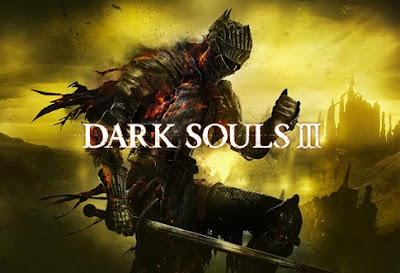
Dark Souls 3 Game Review

http://www.reviewgamers.com/


Dark Souls 3 hasn't so much learned from its predecessors as devoured them, tearing into their stories and geographies as it seeks for a means of standing apart, of starting afresh. Roving the world of Lothric is like swimming with gobbets of the first game’s Lordran and Bloodborne’s Yharnam – a recognizable statue, a ring’s thing description that implies at lost origins, a special area of effect attack that had me howling in acknowledgement even as it ripped my well-being pub in two.

Sometimes, this could be a purebred Dark Souls game sequel, a maze of attenuated masonry populated with comical-looking gargoyles, where you may wage ferocious however dignified jousts against knights equipped with swords and spears. But then the skin splits and it's a Bloodborne sequel in all but name, offering up pyres of burning corpses and wiry, ruby-eyed abominations who'll knock you off-equilibrium with raking combos or slide around your defences, reaching for the jugular. Sometimes you feel like a survivor, inching through deceptively wonderful chambers with shield held out like a letter of apology. And occasionally, you feel like a mini but terrible predator, dropping through the swipes of giants and dragons to strike at ankle and underbelly.

http://www.reviewgamers.com/ 

Gameplay
Both styles are expertly joined over the course of a 60-70 hour experience, and you're able to obviously, shift the emphasis by tweaking your character’s stats suitably. But one major drawback is that Dark Souls 3 lacks a voice of its own. In broad terms it is a rewrite of the original: the player is once again a cursed undead, resurrected to seek redemption by slaughtering corrupted beings and trading their spirits for degree-ups and gear. Your quarry, this time, are four wayward Lords of Cinder, whose embers must be restored with their thrones in Lothric’s version of Lordran’s Firelink Shrine. As with Majula in Dark Souls 2, the latter currently functions as a distinct customization heart, reachable via teleportation from bonfire checkpoints out in the world, where you are going to strike retailers, a mournful Firekeeper who handles character levelling and Andre, the first game’s grandfatherly blacksmith.

Dark Souls 3’s geography is not almost as disconnected, though it can not match the exquisitely meshed, wraparound terrain of the first. The game occurs on the property of a huge fortress, spilling down from airy battlements to your hamlet, woods, a cathedral, a diseased swamp and skeleton-ridden catacombs that take you beyond the curtain wall to some frostbitten citadel. Many of the vital areas are visible from a distance, and, as with Lordran, studying a location you've only beat from a precipice meets in a way no thing wages ever could. All that toil and terror, all those agonising fights with the dregs of show originator Hidetaki Miyazaki’s subconscious, reduced into a huddle of turrets on the horizon.

Particular sections are fairly linear, but even the most claustrophobic is packed with secrets and shortcuts – a matter dangling from a window you CAn't reach from inside a building, or elevators that save you the trouble of tussling with minions en-route to some boss. You can even activate crucial encounters in distinct orders given a little computation, possibly unlocking alternate finishes in the action, and you can find entire regions, together with significant NPC side stories, which you will miss if you do’t heed the traces squirrelled away in the dialogue and lore.
http://www.reviewgamers.com/ 

Dark Souls Franchise
Lothric’s splendour is, alas, hampered by a few too many callbacks to spots from previous games, although the idea is frequently as much to desecrate as detect. More problematically, the game’s single action story arc robs the world of thematic weight. There’snot that renewed sense of purpose you may have considered on getting the Lordvessel in Dark Souls 1, or downing Rom in Bloodborne. Bosses, meanwhile, run the gamut out of your surgical through the grandiose to the somewhat gimmicky. You will find things you will greatest by dint of scrupulous pattern-reading and a sixth sense for the dissimilarity between combo finisher and a linking strike – gruelling encounters that symbolize video game conflict at its most sophisticated. But in addition, there are huge bads which are more about spectacle, where success is an issue of poking an open bit till it pops, or using something in the surroundings, though it may reimburse one to fight without resorting to such measures.

It's a great rogue’s gallery for the most part, with each enemy a grotesque expression of some cosmic neglecting or catastrophe, but I 'm not convinced there is a star – specialists anticipating a conflict as brilliant and penalizing as Ornstein and Smough may leave disappointed. My standouts include the Dancer of the Boreal Valley, a crooked yet balletic titan whose shaky cartoons are tough to time, and Aldrich, Saint of the Deep, a grisly sorcerer with a quite, shall we say, close relationship to Lords of yore.

Battle System
The battle system itself stays big and punchy, despite a frame rate that gets the better of well below 30 during more SFX-essential battles. It's built once again around blocking, rolling, backstabs, parrying and two giving weapons for added damage, but there are now Weapon capacities – florid classification-special specials like charging spear strikes and guard-breakage uppercuts that devastate when they join, but usually leave you wide open when they tend not to. These draw on a brand new Focus Point gauge which is also emptied by magic (spells no more have a set quantity of uses) and is refilled by drinking new “Ash” Estus flasks that share stock space with the fundamental health-replenishing variety. Naturally, tethering magic and weapon graphics to exactly exactly the same resource pool obliges one to be clear about which design you favour. Are you currently really the sort to lob lightning bolts and toxin clouds, or would you rather increase the might of your ax-swing care of the War Cry capacity?

PVP
The abilities system looks more skin graft than a sea change, in hindsight – I polished off most AI adversaries using the old tactic of riling them from afar with fireballs, then somersaulting in and out of swiping range. But the true test of its value will be how it holds up in PvP over the months later on. As in previous games, inventing “covenants” with special evasive NPCs opens the way to unique flavours of multiplayer. Disciples of the sun covenant are columns of the community, placing their summon sigils to help those fighting with managers or nefarious reddish phantoms. The latter, meanwhile, is Lothric’s highwaymen, infringing worlds to kill their hosts.

In place of the first multiplayer Humankind system, Dark Souls 3 gives you Embers that can be conquered in return for a health bar extension and the skill to summon coop associates, at the cost of opening the door to some possible invasion. It is a simplification that could annoy returning players, but it does make crossing the barrier between solo and totally online play much more tempting, which ought to lead to a more exciting PvP community. From has also streamlined gear improvements – you cannot augment armour and clothing, which scales up with your nature’s measure. You’ll uncover still plenty of armour sets to assemble and play around with, yet – some built to endure, others for agility – and the passed weapon customization is powerful enough to grab the slack. Along with raising the basis strength using titanite, you'll find a stone that uses status effects or scale a weapon’s power centered on individual stats.

It's a strong reshuffle of the attribute set, generally, augmenting the first’s machines while throwing in several new wrinkles for specialists. But it is expressive of a game that is more about setting a capstone on a formula than raising the roof. Dark Souls 3 is a vigorous narrative of sacrifice and cunning. It’s oblique, penalizing and gratifying in a way mainstream games console hits seldom dare to be. But the fires are undoubtedly expiring. There is been some doubt over whether this is the final Dark Souls title – Miyazaki has indicated as much, but the decisions comprise dutiful suggestions about future sequels.

To read more game reviews, visit Review Gamers at http://www.reviewgamers.com.